Royalties calculated, invoiced and chased
The calculation runs every month on revenue synced from each branch's CRM. The invoice goes out, collections follow, and the franchisee sees the base line by line.
A human replies within one working day. No sign-up, no public trial.
What a royalty spreadsheet ends up costing
A network of a few branches keeps its royalties by hand, and it is right to for as long as that holds. Three things give way first.
The base is self-declared
As long as revenue is typed in by the branch, the royalty rests on what the branch chose to declare, and the head office has no way of knowing.
The statement cannot be checked
The franchisee receives an amount, not a base. They cannot verify what they are paying, so every gap becomes an argument rather than a correction.
Disputes leave no record
A dispute settled over the phone comes back six months later, on a different month, with nobody able to say what was agreed.
The month, the branch, and what is still outstanding
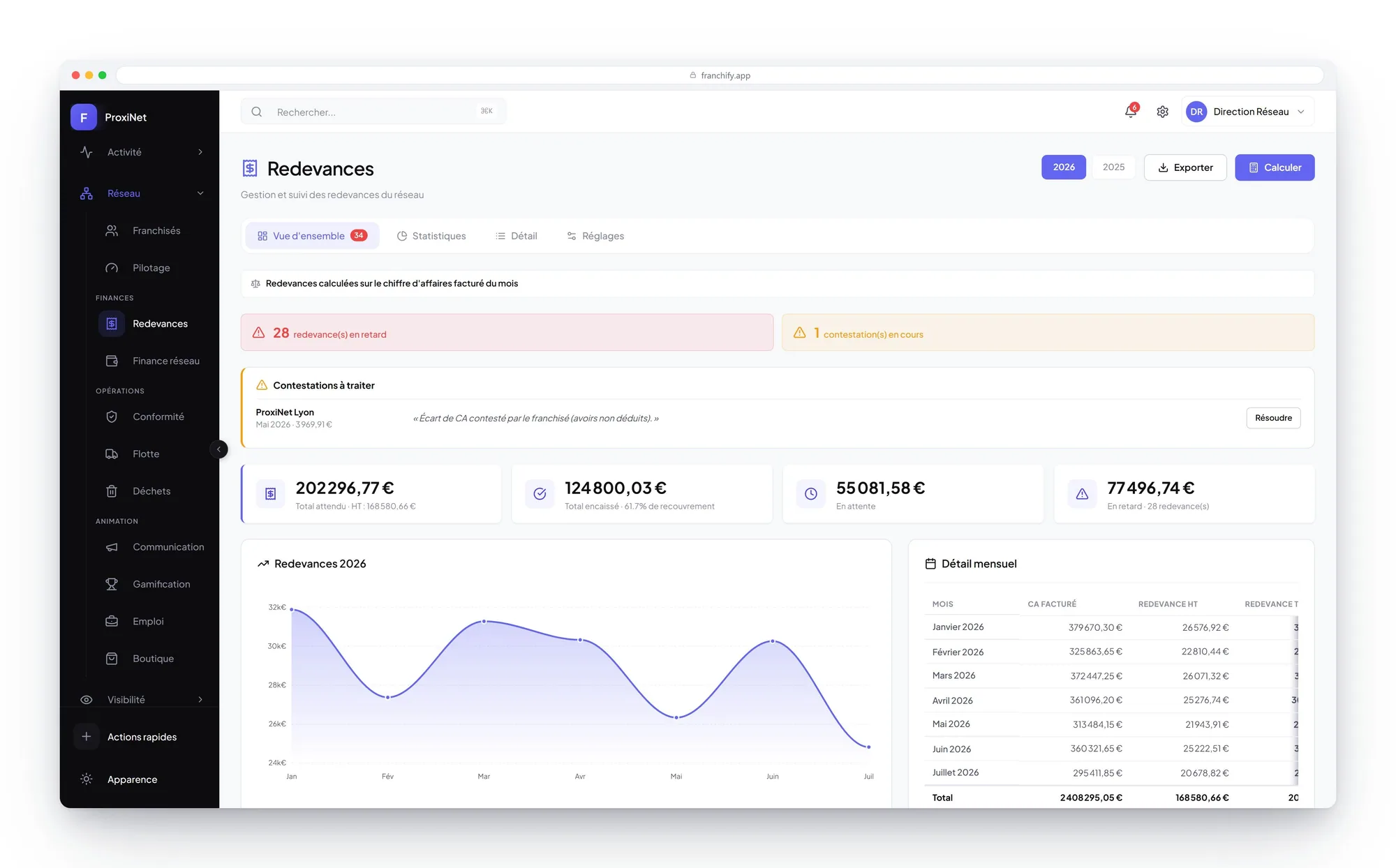
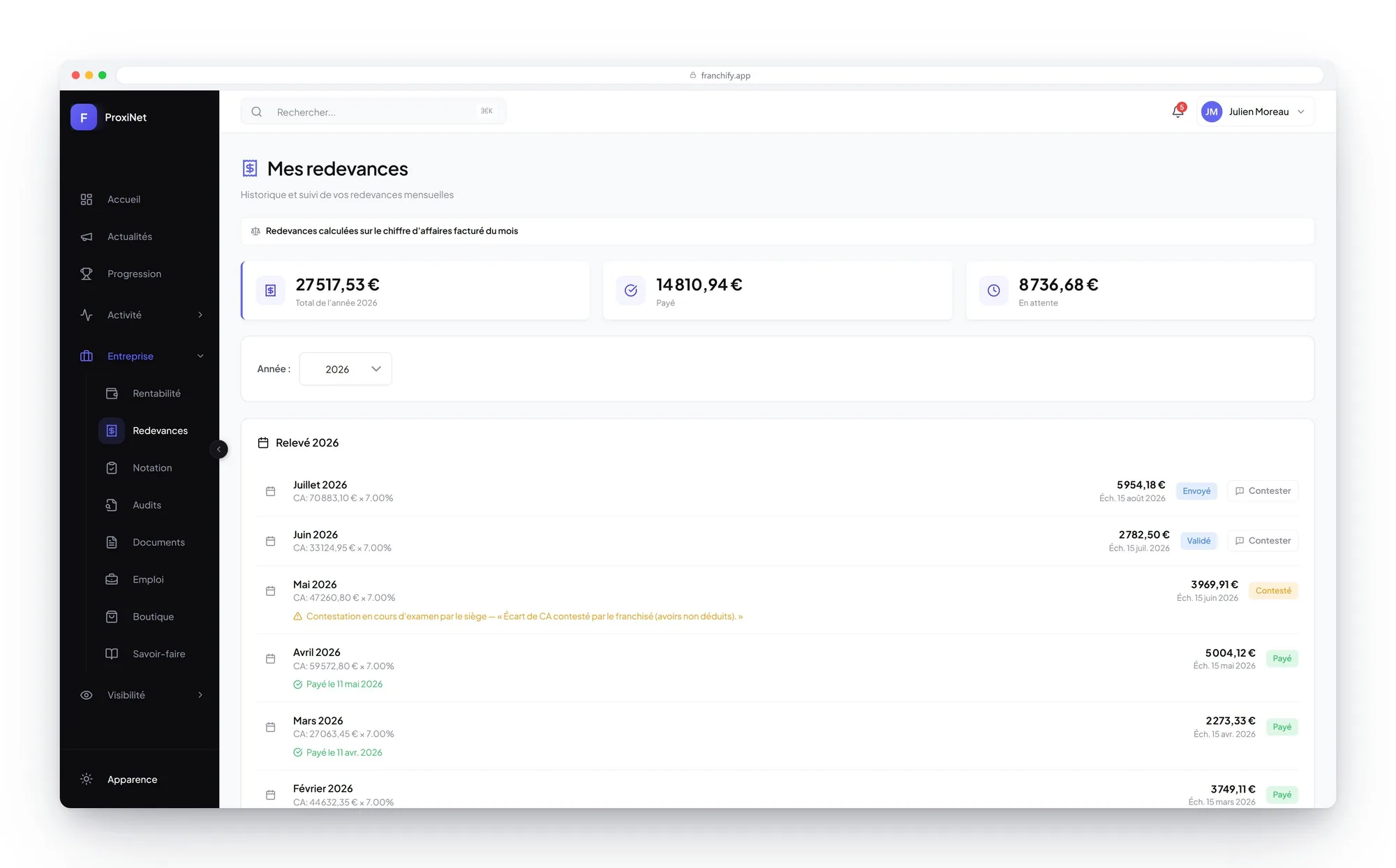
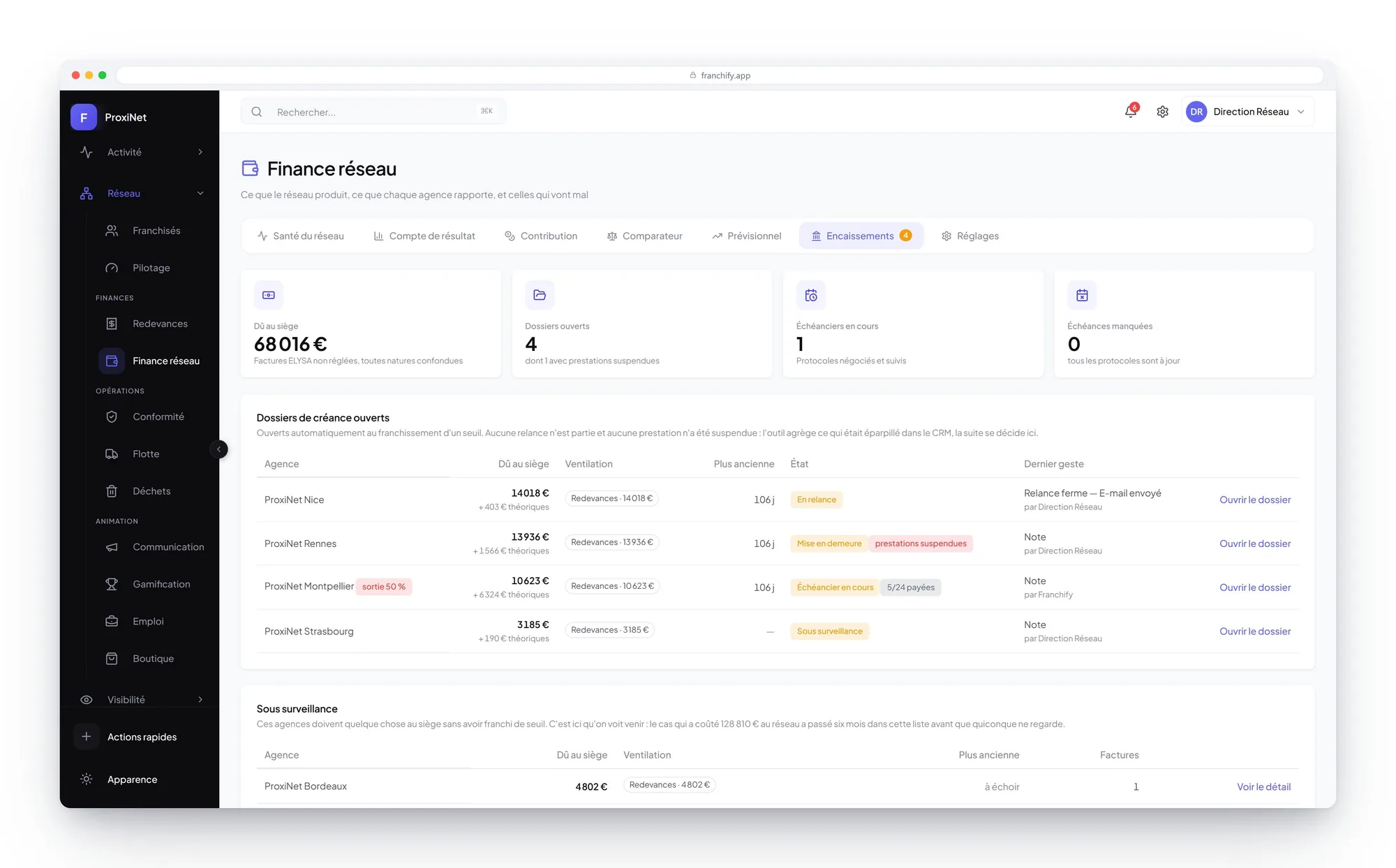
Example shown on the ProxiNet demonstration network. Screens, indicators and registers are configured for your trade.
The first two screens show the same month: the argument stops because both sides are reading the same line. Screenshots shown in French.
Three moments, every month
The cut-off date is the same for every branch. What follows runs on its own up to the chase; what needs a person is flagged, not done in your name.
Revenue comes up
Each branch's invoices are synced from its own CRM. The base stops being self-declared, and the scope is the same across the network.
The calculation lands
Flat or tiered rate, floor, cap, ramp-up period: the rules are set agreement by agreement. The statement is issued line by line, on both sides.
Follow-up starts
Invoice, arrears flagged, graded reminders and receivables cases. A dispute opens a case with the head office instead of triggering one more chase.
No pricing and no duration is stated here, and that is not an oversight: the scope is decided in the demonstration, and the price follows the scope.
What is set agreement by agreement
A network rarely runs on a single scale. The rules attach to the agreement rather than to the network, so two generations of franchisees can coexist without a manual exception.
Flat or tiered rate
One percentage, or bands. The band is assessed monthly or annually, and the year-end settlement follows the rule you chose.
Floor and cap
A minimum due even at zero activity, and a maximum where the agreement provides one. Both show on the franchisee's statement; neither is applied quietly.
Ramp-up period
A reduced or zero rate over the first months after opening, with an end that is a date rather than a judgement call.
Advertising fund kept separate
It is calculated like the rest and tracked apart, because it is an earmarked budget the head office has to account for.
What we get asked about the calculation
What is the calculation based on?
Does the franchisee have to change invoicing software?
What happens when a franchisee disputes a line?
Are collections included?
What about an owned branch network, with no royalties?
A product we show, not one you download
We walk through it on your own network, and we tell you plainly whether you need it today or not yet.
Request a demonstration